Supporting on-site property teams across 17 states requires more than effective communication—it requires a centralized, reliable source of information that empowers employees to make informed decisions. Property managers are responsible for navigating a wide range of responsibilities, including affordable housing compliance, leasing, resident relations, marketing, operations, vendor coordination, and team leadership. Many work in geographically isolated locations with limited day-to-day access to corporate support, making accurate documentation and self-service resources essential.
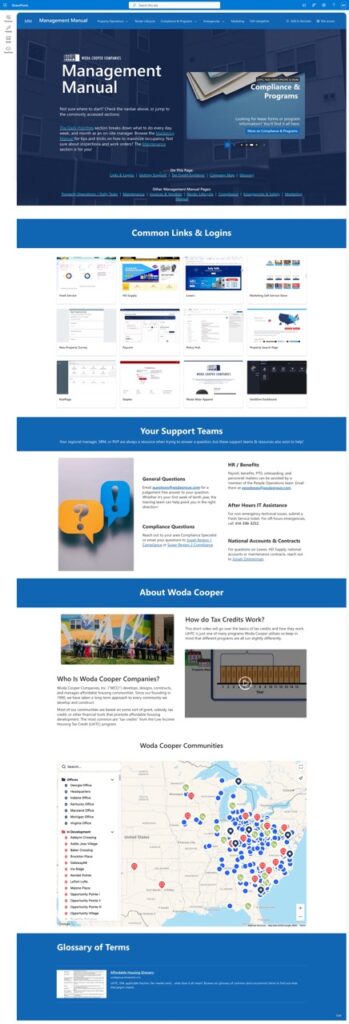
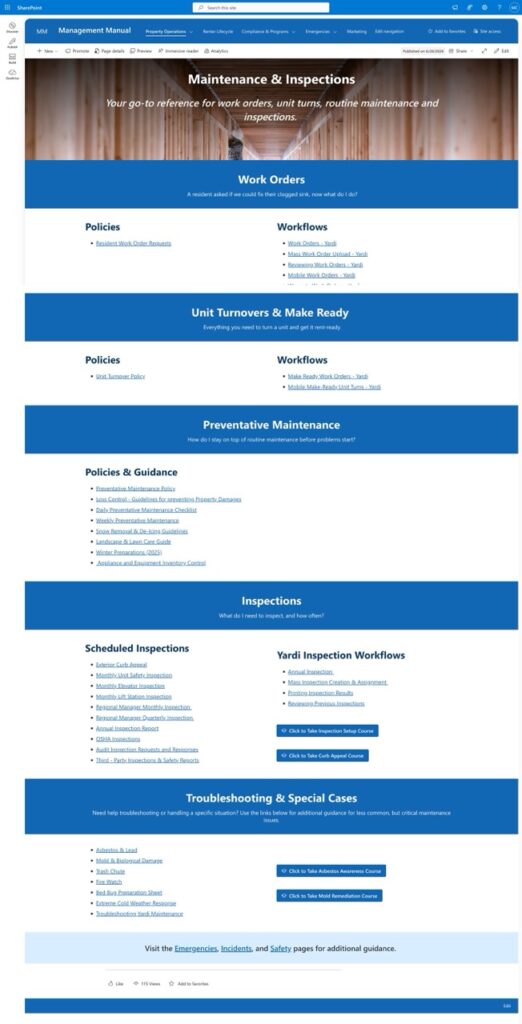
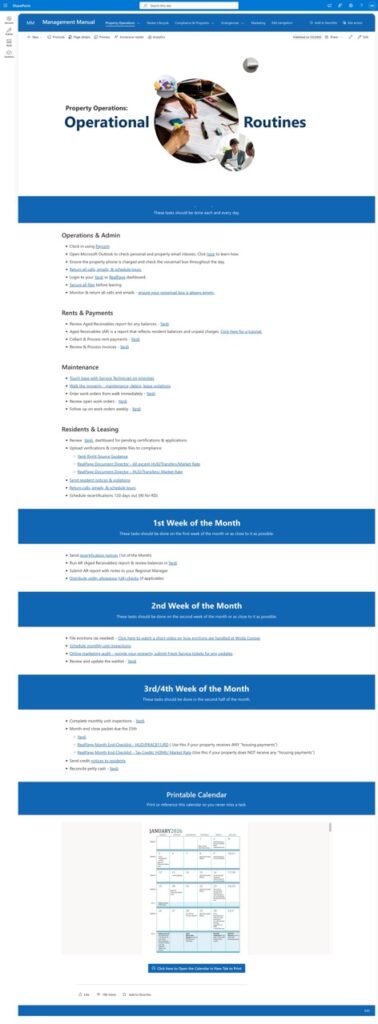
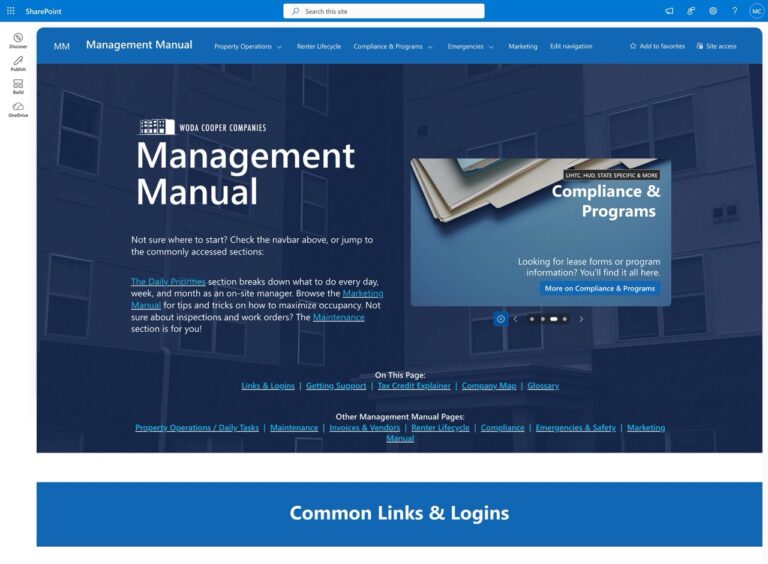
To address this need, my education team developed the Management Manual, a comprehensive SharePoint knowledge base that brings together hundreds of policies, procedures, reference materials, external resources, and step-by-step guides in a single, searchable platform. Rather than relying on institutional knowledge or lengthy email chains, on-site teams can quickly locate the information they need to solve problems, remain compliant, and operate more efficiently.
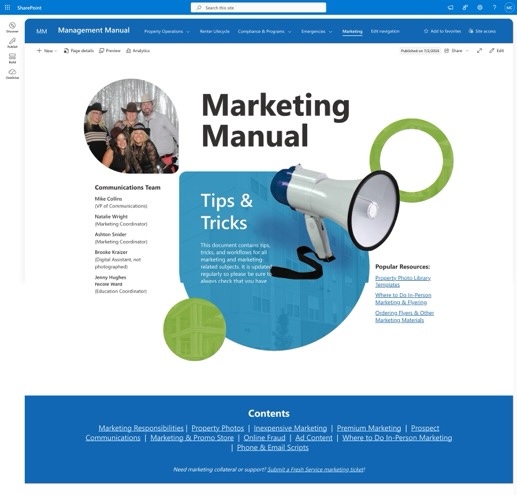
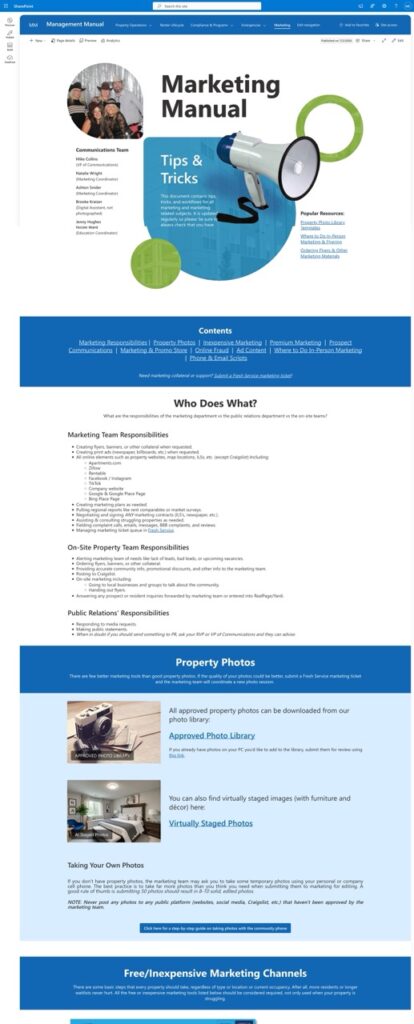
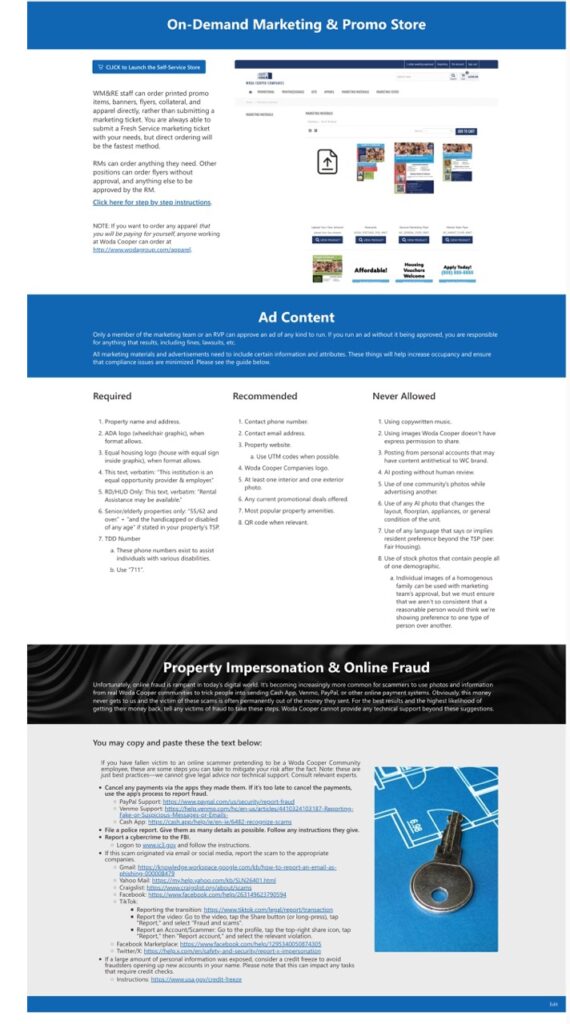
Though I was heavily involved in all aspects of this project, as the marketing leader, I was fully responsible for developing and maintaining the marketing section of the manual. My goal was to equip community teams with the knowledge and tools needed to market effectively while remaining consistent with company standards. The content includes best practices for digital marketing, guidance on reducing vacancies, instructions for utilizing corporate marketing resources, fraud prevention strategies, reputation management, social media standards, and practical solutions to the day-to-day challenges faced by leasing and management teams.
One of the greatest challenges in property management is ensuring that employees have access to accurate, current information when they need it. Regulations evolve, marketing platforms change, operational procedures are updated, and every delayed or incorrect decision has the potential to affect occupancy, compliance, resident satisfaction, or financial performance. By creating a centralized, well-organized knowledge repository, we reduced dependency on corporate staff for routine questions, improved consistency across hundreds of communities, accelerated onboarding for new team members, and enabled property managers to resolve issues with greater confidence and speed.
The result is more than a documentation library—it is an operational resource that empowers local teams, promotes consistency across the organization, and allows corporate departments to focus on higher-value strategic initiatives instead of repeatedly answering the same questions.